

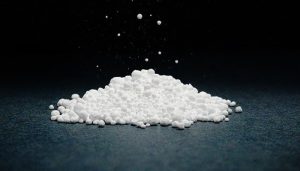
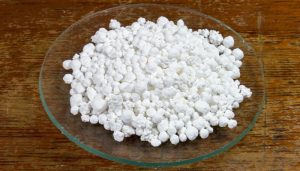
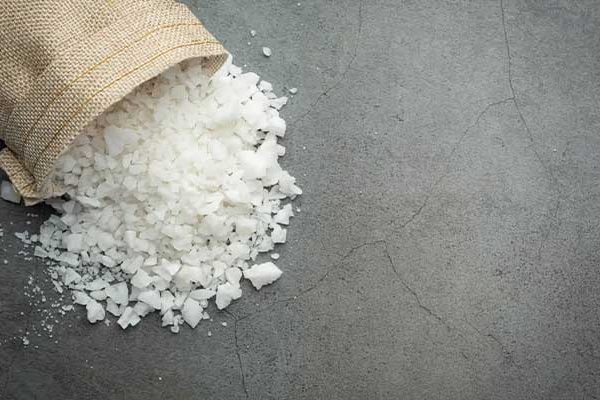
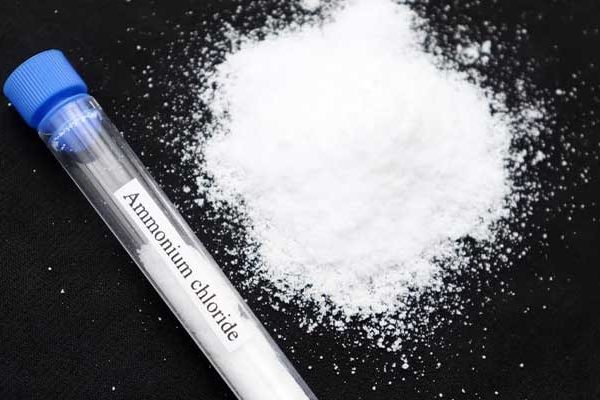
Calcium chloride is an odorless, white, crystalline solid compound that is highly soluble in water. A type of salt, calcium chloride is hygroscopic, meaning it can absorb water molecules from its surroundings.
While you may have noticed that calcium chloride has a variety of uses, it can also pose potential health risks if used improperly. In this article, we will introduce this chemical and explain the uses and price of calcium chloride for food and industry.
Why Calcium Chloride? Physical and Chemical Properties of Calcium Chloride
Calcium chloride is very effective at absorbing moisture from the surrounding air and is one of the most humid substances. In fact, calcium chloride can absorb several times its own weight in water and will dissolve in salt water if the air is humid enough and the temperature is high enough.
It is a white powder or granule at room temperature and is highly soluble in water. Calcium chloride desiccants work well in a temperature range from freezing point to 80°C or more.
Calcium Chloride (CaCl₂) is one of the most widely used industrial chemicals across water treatment, petrochemical industries, oil & gas drilling, road maintenance, agriculture and food processing.
Known for its high moisture-absorption capacity, fast solubility and excellent performance in low temperatures, Calcium Chloride is considered an essential material for many industrial operations
Types of Calcium Chloride
77% Calcium Chloride (Flakes / Granules)
Used in drilling fluids
Dust control on unpaved roads
De-icing and soil stabilization
94% Calcium Chloride (Food Grade / Industrial Grade)
Used in food processing
Refrigeration systems
High-purity industrial processes
Calcium Chloride Solution (Liquid CaCl₂)
Used for fast de-icing
Cooling towers and chillers
RO and water treatment systems
Calcium Chloride Applications
Calcium chloride is a very common chemical in energy-efficient thermal engineering applications. Among other applications, it is practically used in various applications of phase change materials, closed absorption processes, cooling or dehumidification with desiccant, refrigeration, drying, water.
Calcium chloride is also used in combination (composite) with other materials in order to improve their suitability for the above-mentioned applications.
An inorganic chemical compound distinguished by a strong susceptibility to moisture absorption. Calcium chloride is widely used in road construction, construction and chemical industries, coal, oil and gas mines, as well as agriculture and horticulture.
Other uses of calcium chloride include:
Food industry
Dust absorber
Calcium chloride in concrete
Medical industry
Fruit and vegetable preservation
Swimming pool water purification
Construction industry
Oil and gas industry
Activated carbon production
Rubber manufacturing
Calcium Chloride Production Method
There are four methods for producing calcium chloride:
Solvay Process
In this method, the raw materials for producing calcium chloride are calcium carbonate, or limestone, and hydrochloric acid. The production steps in this method are as follows:
Preparation of hydrochloric acid solution
Hydrochloric acid is prepared at an appropriate concentration (about 32%).
Neutralization reaction
Limestone is gradually added to the hydrochloric acid solution. In this reaction, carbon dioxide gas is produced and the reaction continues until the pH of the solution reaches about 6.5 to 7.5.
Purification
The solution obtained from the neutralization reaction is passed through a filter to separate solid particles.
Concentration
The purified solution is concentrated in a hot water bath to produce calcium chloride crystals.
Drying
Calcium chloride crystals are separated from the solution and dried at room temperature.
Ion Exchange Process
In the second method of producing calcium chloride, this material uses ion exchange between sodium chloride (NaCl) and calcium carbonate (CaCO3).
The general steps of the production method are as follows:
Preparation of NaCl and CaCO3 solutions
NaCl and CaCO3 solutions are prepared separately.
Mixing the solutions
NaCl solution is added to CaCO3 solution. In this reaction, sodium carbonate (Na2CO3) precipitate is formed.
Separation
The solution obtained from the reaction is passed through a filter to separate the Na2CO3 precipitate.
Concentration
The purified solution is concentrated in a hot water bath to produce calcium chloride crystals.
Drying
Calcium chloride crystals are separated from the solution and dried at room temperature.
Electrolysis
In this method, electrolysis of sodium chloride solution is used to produce chlorine and hydrogen. Then, chlorine reacts with hydrogen gas to form hydrochloric acid. Finally, hydrochloric acid reacts with limestone to produce calcium chloride.
Leblanc Process
In this method, common salt (NaCl) and sulfuric acid (H2SO4) are used as raw materials. In this process, HCl gas is produced, which then reacts with limestone to produce calcium chloride.
Choosing the right method for producing calcium chloride depends on various factors such as the desired purity, production cost, production volume, and availability of raw materials.
Is Calcium Chloride Safe?
Calcium chloride is safe to use, just like salt or baking soda!
Is Calcium Chloride Toxic?
Calcium chloride is safe and non-toxic.
What is the difference between salt (sodium chloride) and calcium chloride?
In cooking, when we talk about salt, we mean sodium chloride. Whatever type of salt is used (sea salt, table salt, pink salt, Himalayan salt, kosher salt, Celtic salt, etc.) its chemical formula is always sodium chloride (NaCl).
Calcium chloride (CaCl2) is also a salt, but they are chemically different!
Sodium chloride (salt) is made up of sodium atoms and chlorine atoms. Its chemical formula is NaCl.
Calcium chloride is made up of calcium atoms and chlorine atoms. Its chemical formula is CaCl2.
Calcium chloride and sodium chloride are safe and edible food additives.
What does calcium chloride taste like?
Calcium chloride has a salty taste. If used in excess, it can also add a slight bitterness.
Safety tips for using calcium chloride
Wear protective clothing, goggles, and gloves when working.
Wash hands after handling.
Contact with eyes can cause serious damage.
After inhaling this material, leave the workplace and get fresh air.
In case of skin contact, change contaminated clothing and wash the area with water.
If accidentally swallowed, drink 2 glasses of water and seek medical attention.
Where can I get calcium chloride?
Andisheh Mehraray Sepahan Company supplies industrial and edible calcium chloride in powder and granule form to the market. You can experience confident selection and purchase by contacting Andisheh Mehraray Sepahan Company sales experts at 03137779443 and receiving specialized advice.
Factors Affecting the Price of calcium chloride for food and industry
There are several factors that affect the price of calcium chloride for food and industry. These factors include:
Calcium Chloride Grade
Calcium chloride is produced in different grades such as industrial, food and pharmaceutical. The price of industrial calcium chloride is cheaper than other grades.
Calcium Chloride Purity
Calcium chloride is produced in different purities. The higher the purity of calcium chloride, the more expensive its price will be.
Order Quantity
The price of calcium chloride with high tonnage is cheaper than orders with low tonnage.
Market Conditions
The price of calcium chloride, like other chemicals, is affected by market conditions and currency and dollar fluctuations.
Calcium Chloride Sales and Exports
Exports of calcium chloride to neighboring countries with export quality are loaded in 25 kg packages in 1 ton jumbo bags and will be allowed to leave the border after customs clearance and car sealing.
Amas Chemical Company (Andisheh Mehrara Sepahan) exports edible and industrial calcium chloride to other countries.
Conclusion
Calcium chloride is a widely used chemical. It is used in agriculture, dyeing and textile, water treatment, construction, etc. The price of edible and industrial calcium chloride depends on factors such as tonnage, currency exchange rate, purity percentage, and other factors.

نقد و بررسیها
هنوز بررسیای ثبت نشده است.